Getting to the start line of any race requires preparation especially if you plan to enjoy it.
Mine started at the end of 2023 when I got a place in the London Marathon. I had never had any desire to run a marathon. It seemed like a lot of work and the distance was out of my reach, yet I had a place so I had better start training. Now London is a very big busy road run, so I decided to also book myself something more fun and adventurous to run. A trail ultra marathon in Maderia. I had seen some pictures and an old friend of mine who had done it the year previously. It looked great and the polar opposite from London. If I was going to get fit for a long run I may as well do 2.
So at the start of 2024 I did the standard 12 week training block of marathon training it went well and ticked of a marathon. I then switched to trail training. Routine hills or speed work during the week, a 10km technical trail run. The long runs or hikes usually in trails and hills to build time on legs. As part of my training I now ran with a hydration pack, slowly adding additional items each week. Getting used to run with it, drink from it and generally running with a bit of extra weight and figuring out where things should go.
As part of my build up to trails I ran outside Hope round in the peaks a 20 mile round with about 1000m of vertical, the yorkshire 3 peaks another 1000m of vertical over 24 miles. Plus a 12 hour night run which I covered 50km in but did have a 5 hour nap in the middle. Several 25km trail runs with 1000m of elevation helped me with both navigation and the mentality it is ok to walk on a run. Several local weekly runs round trails to help build confidence on trails and strengthen the stabilising muscle groups in my legs. Long walks round Holyhead and Wales mountains just to get time on feet in the gear I would be running in.
This year I have covered about 1500km and 26000m of elevation.
I also joined a gym the first time in many years, doing stair climbing, strength and conditioning and generic fitness to try and strength the muscles which usually ache after a long run. I also focus on training to run down as well as up hills, usually the down is recovery in a hill set but I knew it would be useful to train. I also managed to aquire a set of running poles from a member of the running club who did not use them, admittedly I only used them once fully in training but could see the benefit on the up hills.
So preparation was going well, very few injures and feeling ok with my preparation. I was still nervous. Never had I tried to cover 2200m+ of elevation and 50km before in the heat. But that is why it is a challenge.
I say highs and lows in the very literal sense as the actual run itself was a massive high and very fun experience.
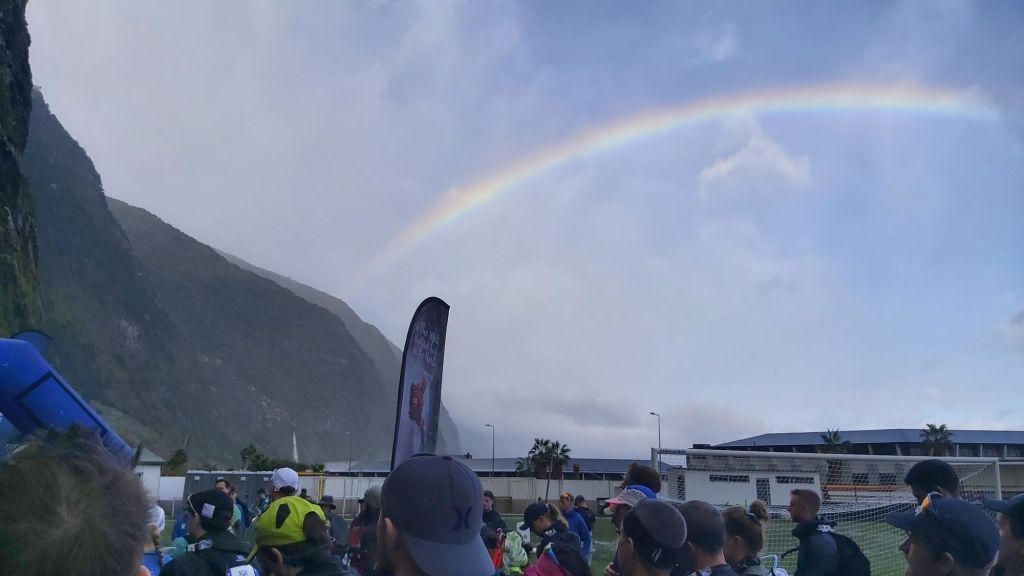
The doubts about the run were all pre start. It was wet, very wet. Authorised weather warning wet. Which delayed the start by 2 hours. Luckily we were able to shelter in a hotel swimming pool area. But there was a lot of anxious waiting, delays, will it be cancelled all together, where will the route go now…. the organisers were very good, kept us informed and did their best in the circumstances.
😟🙁 not good news
We then got the shout to the start line, the rain had eased off, the rainbow shone. Before we knew it we were off. Course still to be advised. Just follow the markers.
Within about 30 minutes of the start the sky was blue the sun was out and the temperature was climbing. It remained hot and sunny all day, which meant spectacular views but hot running.
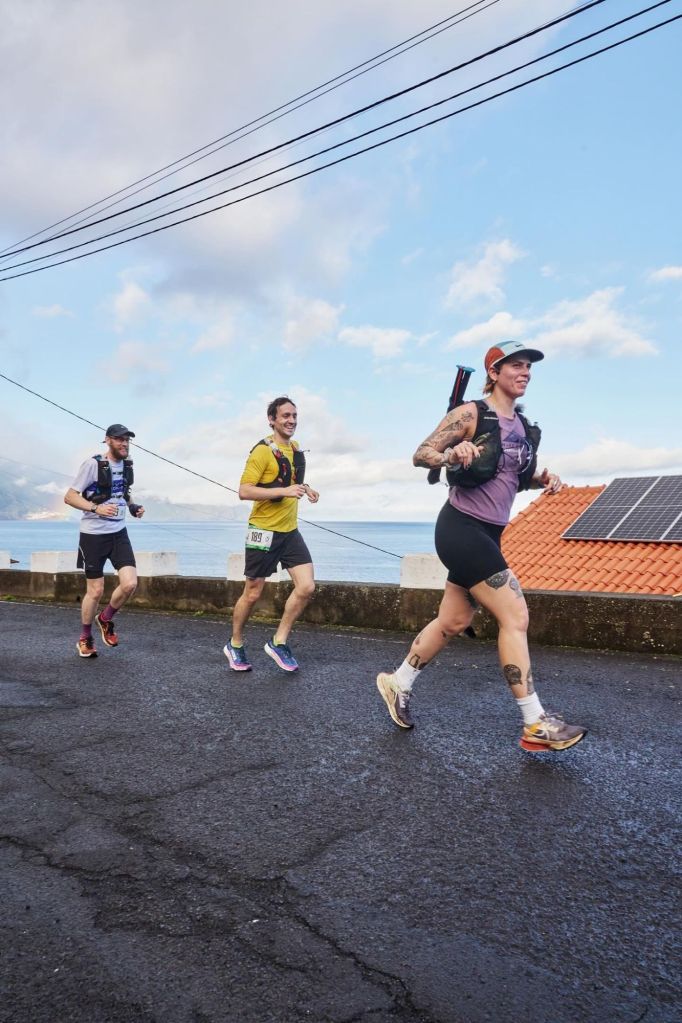
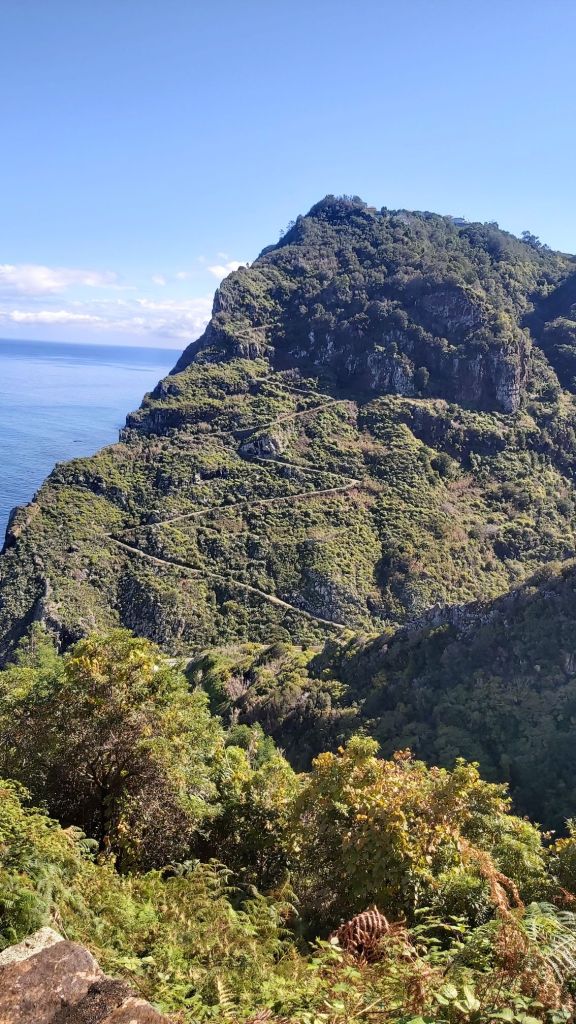
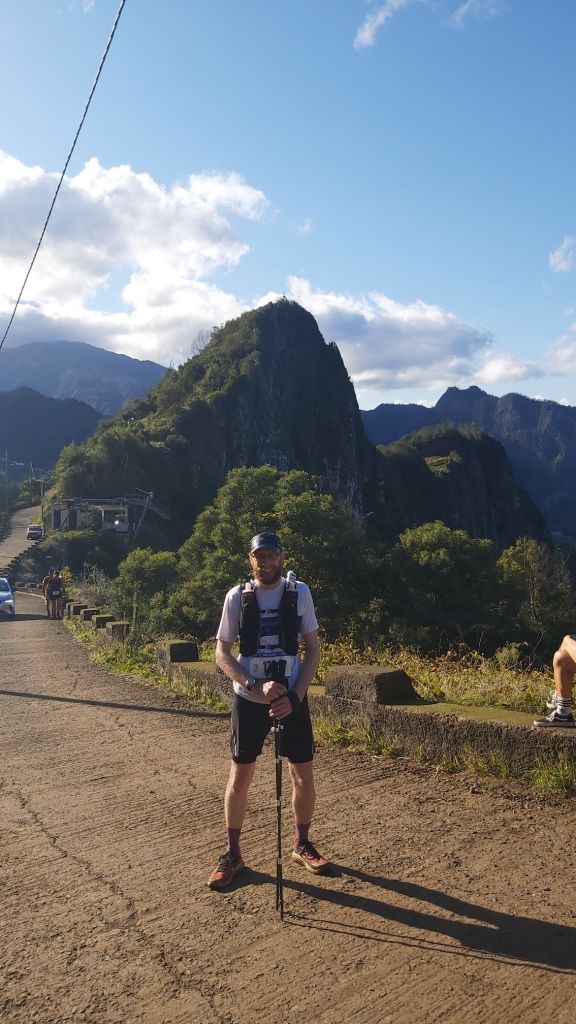
First few km were a gentle warm up along a coast road. Then the first hill arrived, the poles came out (I was debating if I actually would take them, so glad I did as they were then in use the entire time) the first 10km was an eye opener to the steepness of hills between 25-35% gradient on the roads, no idea the steepness of the paths and stairs.
Photo by Matt Pearsonn
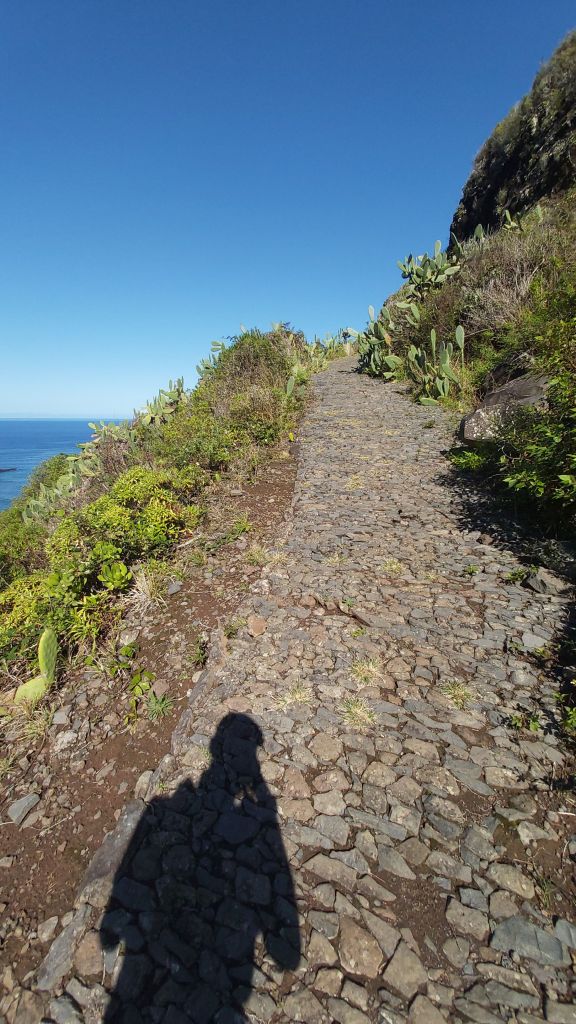
The next 40km were a consistent up or down. Either steep hills, steps or a combination of the two. I knew from the profile it was hilly but what I thought were gentle undulations were in fact very steep climbs. Cobble paths made it slippery on the ups and downs so more walking than running was necessary to be safe. I found a nice pace and plodded on, i did have small concerns at the start if I had to walk the entire thing it would be a very very long day. Chatting to people to see if they were ok, checking we were going the right way. Admiring the stunning views, as much as the climbs were steep the views at the top were so worth while.
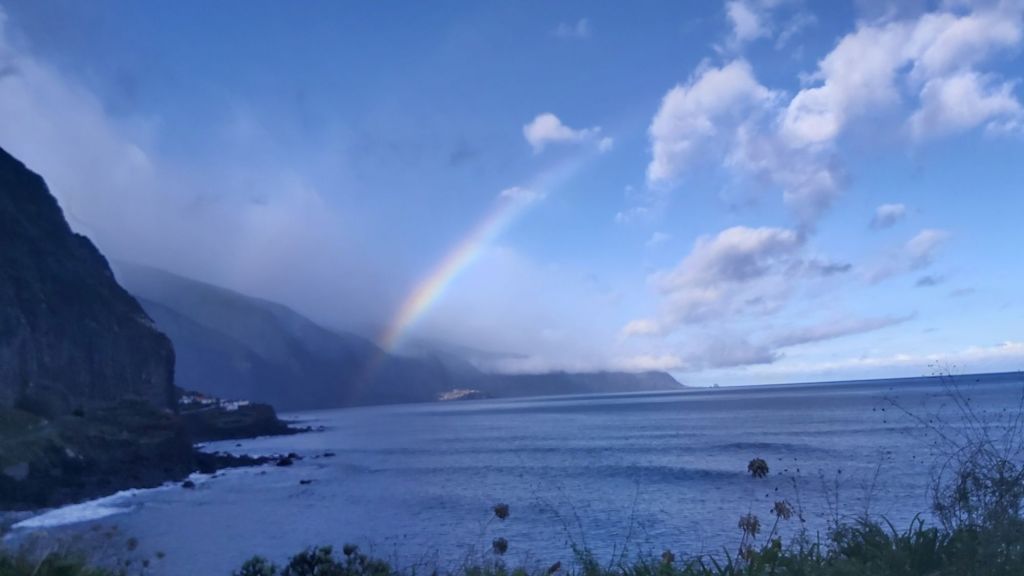
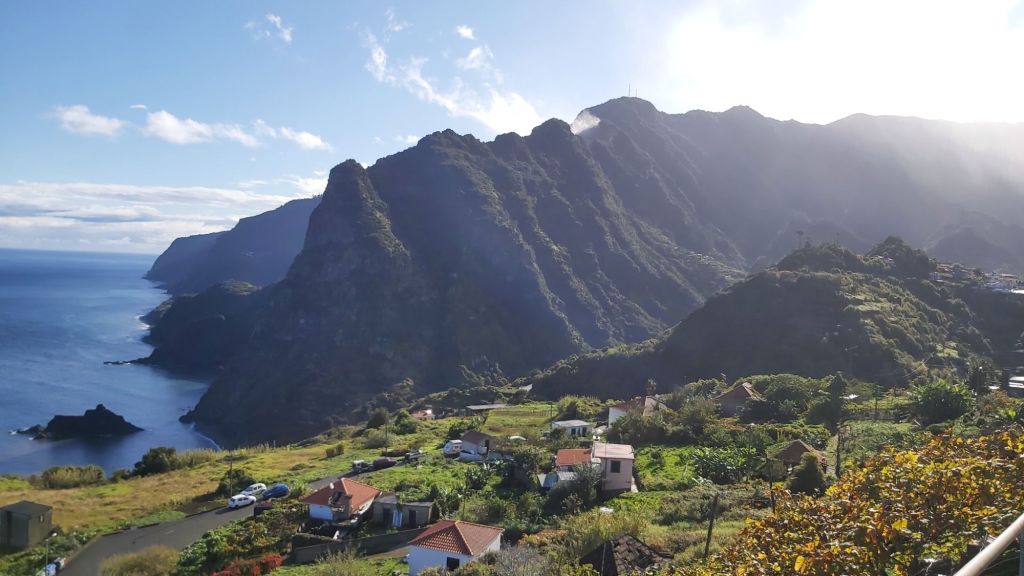
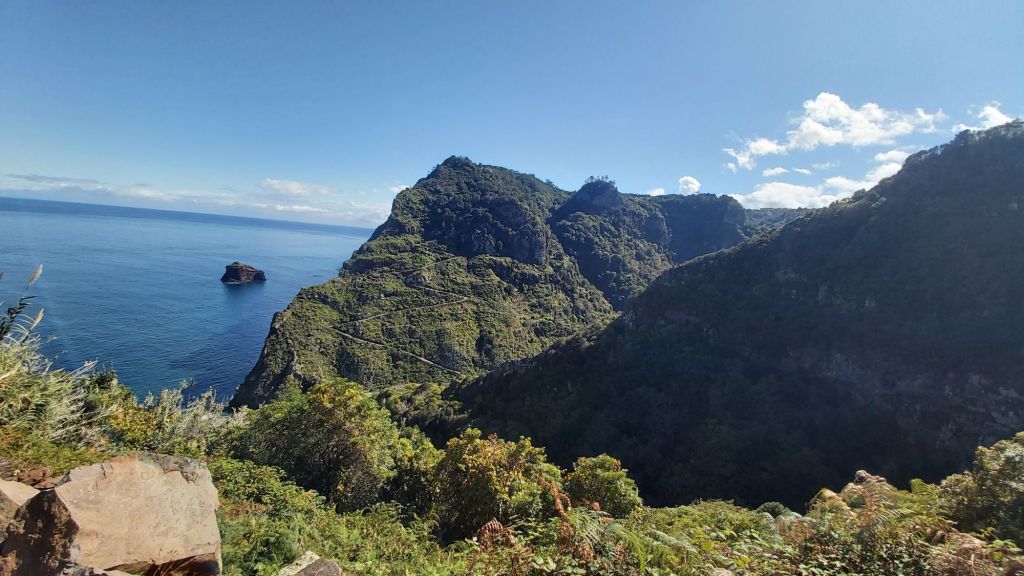
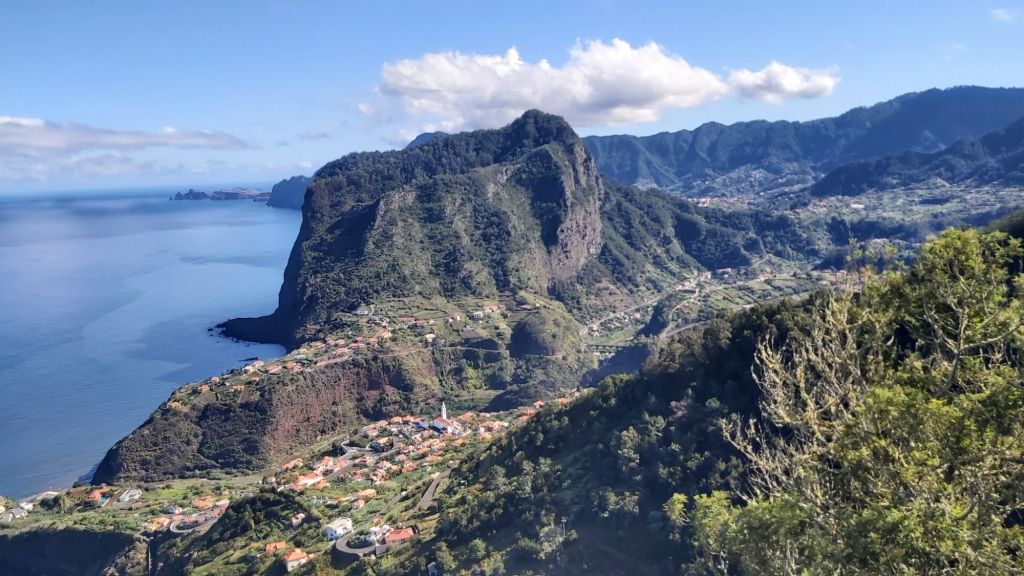
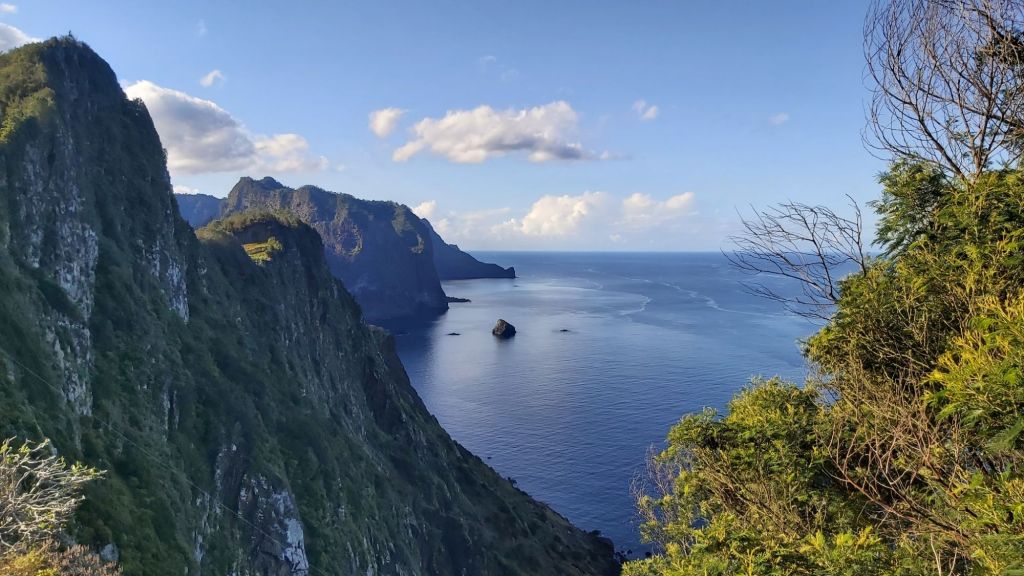
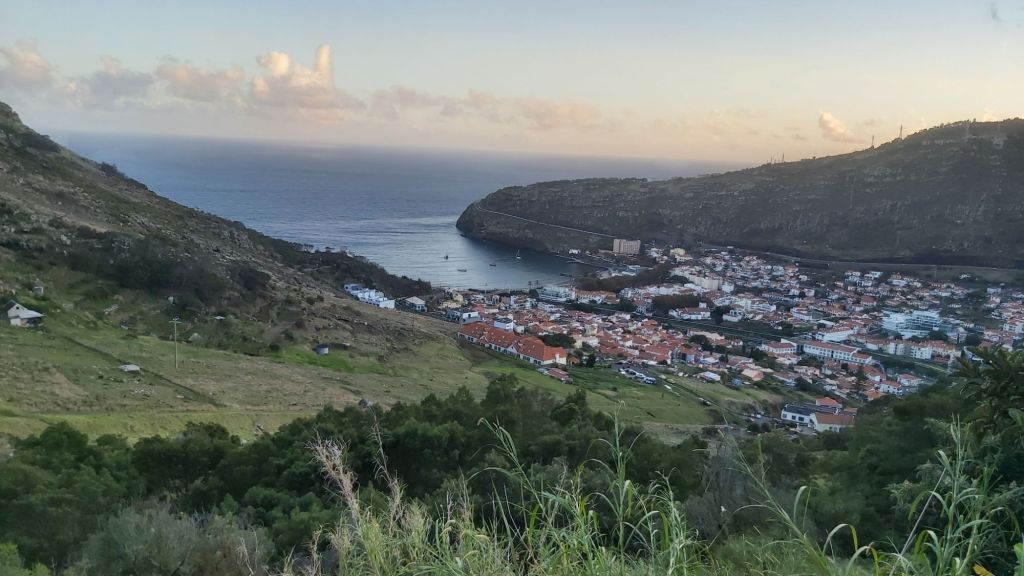
Following the coast line of the north of Maderia the many ups and down I saw the blue sea, the green hills and small towns and villages along the way. Ticking off km and check points.
I was fortunate to find a like minded runner, sports enthusiast and all round good company very early in the race, a random returned dropped Soreen bar. We chatted about other adventures and cheered each other on. Making the 9 hours and 50km pass by quite nicely. Keeping each other on track and moving forward we made a plan to finish in the day light. We kept each other on track and naturally running/jogging along anything that looked flat or smooth, walking the hills. Due to the 2 hour delay at the start meant finishing in the day light was achievable but tough. As we ticked off check points we kept on track. In to the check point, fill up with water, fresh layer of sunscreen, quick handful of snacks, back out and on our way. The volunteers at the check points were amazing, helping fill bottles, checking in and generally a nice welcome sight. I knew if I stopped for too long my legs would decide to give up so I was pleased my running friend had the same plan and we stuck together.
I knew going into the run I could cover 50km due to training over the past 11 months. What I had never done was run that level of elevation or done a point to point run over such a distance. The temperatures, elevation, terrain and being mostly self supported other than water check points were a new challenge.
The path out of check point 2
Getting to the third check point was my mental target as this was after the massive and biggest climb of the run, it was over the half way point and would signify only a half marathon to the end, “only” haha. In reality I broke down the run 1 check point at a time, one hill and occasionally just playing find the route marker. At no point did I feel I was not going to make it especially after check points 2 and 3, my only worry was getting too hot to the point of exhaustion, so made sure I went at a steady pace from the start.
Getting to check point 4 turned out to be harder than expected, it seemed to go on and on for ages, a steep climb up stairs and roads and more stairs. This did mean there was little or no climbing left when we got to check point 4 but wow it was a hot tough effort to get there. Using the natural levada’s which ran ice cold water around the island dipping my cap or buff into it to have a welcome cooling soak was refreshing.
Check point 4The view looking back from check point 4
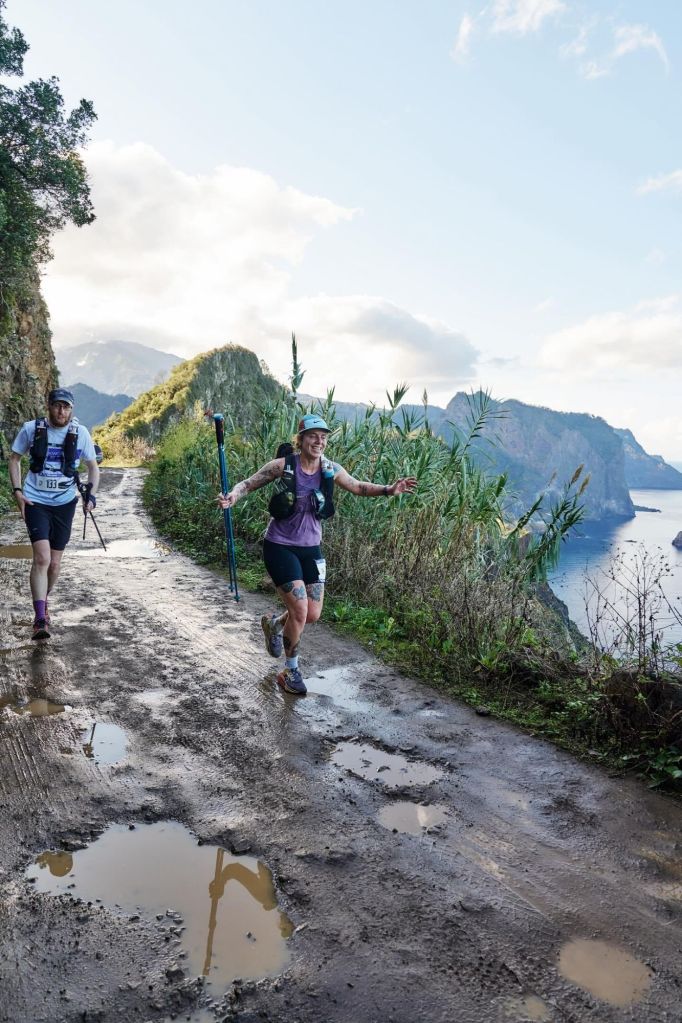
People talk about having A, B and C goals in a run. My A goal was to finish, B goal was to enjoy it and take in the scenery, C goal was to finish strong. I never went into it with any expectations of time as there were 50km of unknown. I also use the term run as for me this was never a race, there was no expectations the only person I had to beat was myself. However coming out of check point 4 in the final 10km a small goal of sub 9 hours crept in. According to my watch ETA this was achievable. The fact the last 10km were relatively flat or a bit of down, on fun muddy trails along the gorgeous cliff edge and coast line. Made for a fantastic last 10km run.
Photo by Matt Pearsonn
The finish was a glorious site. Coming into view after a very narrow Levada trail.
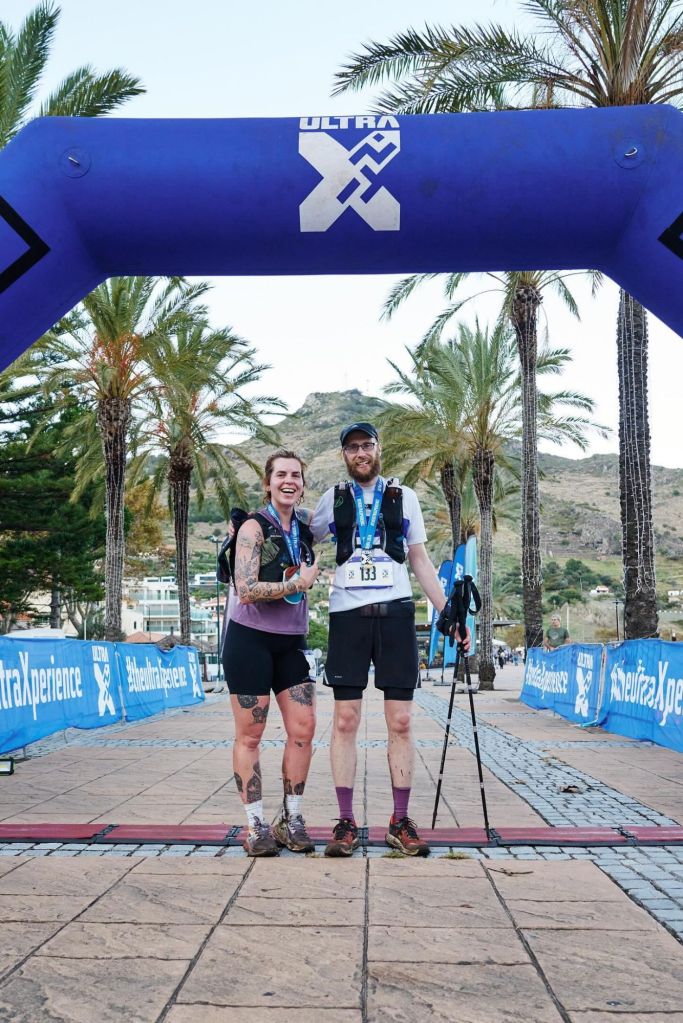
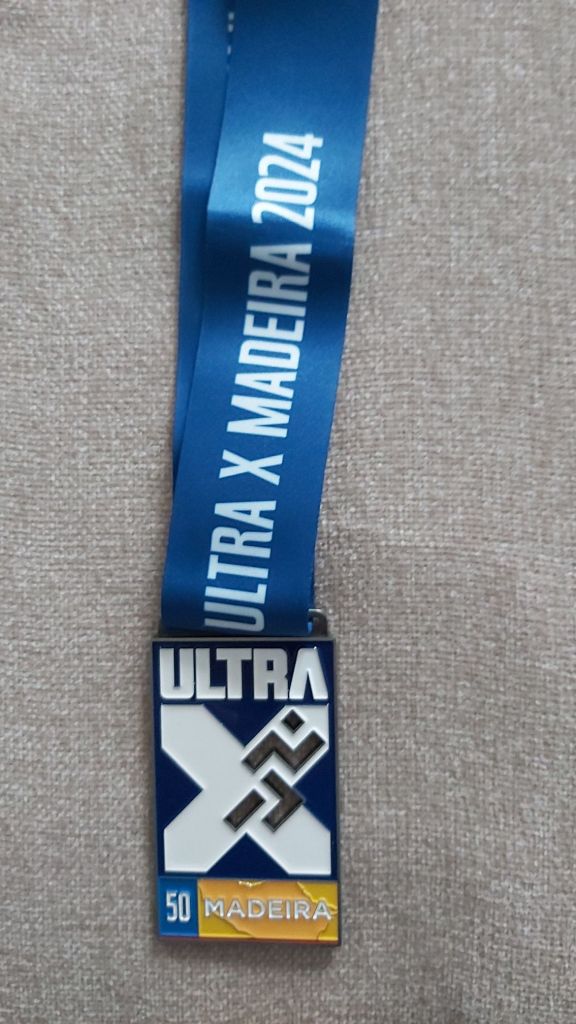
Down hill. Along the beach front to lots of cheering crowds. To cross the line and get my medal was just a nice bonus, the real win for me was turning up doing it and enjoying something this time last year I never thought was possible. Even a float in the ocean after was achieved at the end which was very welcome.
Me and Hattie at the end. Picture by Matt Pearsonn
At the end of the day after a 4am start, 61k steps. 51km run/walked and 2400m of elevation. It was time for bed. I did the fatal error of having a quick sit down before going for food, as I did not feel very well once I had stopped. Ended up waking up at 1am the next day starving. Ate all my snacks for an hour before sleeping until the buffet breakfast opened.🥐
Things to work on. Fueling I took on very little food. Only eating 4 gels and a few handfuls of nuts and pretzels, although I never felt lacking of energy, this may of contributed to being sick afterwards as my body wanted to shut down.
I did consume a lot of water and electrolytes which was my main priority. Trying to stay hydrated and not let my body temperature get too high. I think I drank about 8 or 9 litres over the day.
There are numerous reasons and they have changed over time.
It started as something fun to as a kid. Then it became an easy way to maintain cardio and fitness to allow me to do other sports. I say easy in the sense I just needed some trainers and to head outside. Then it became useful for my mental health as well as my physical wellbeing
For many years it was the cheap, easy option of keeping fit and exploring the area I lived in. It also become useful, being able to get places quickly. Running for help, running to the shops before they close or keeping up with kids as they learn to ride bikes.
It then became a habit to get myself outside, I am a very anxious person and without a reason do not normally go out, however I found running as a good enough reason to leave the house. It gave me a routine to follow and regular exercise. It allowed me to escape my thoughts and focus on the now. It gave my body and mind a kick to activate it from a lazy state.
Then when I moved to a new area it was the only thing I felt confident enough doing. Again it allowed me to explore the area around me and eventually meet some like minded runners. These people then pushed me outside my comfort zone of what I thought was possible for me to do. It also introduced me to places previously unknown to me through the running community. It has also shown me there are many different aspects and variations to running other than just plodding along the paths. Trail running, night running, training drills, long and short distances.
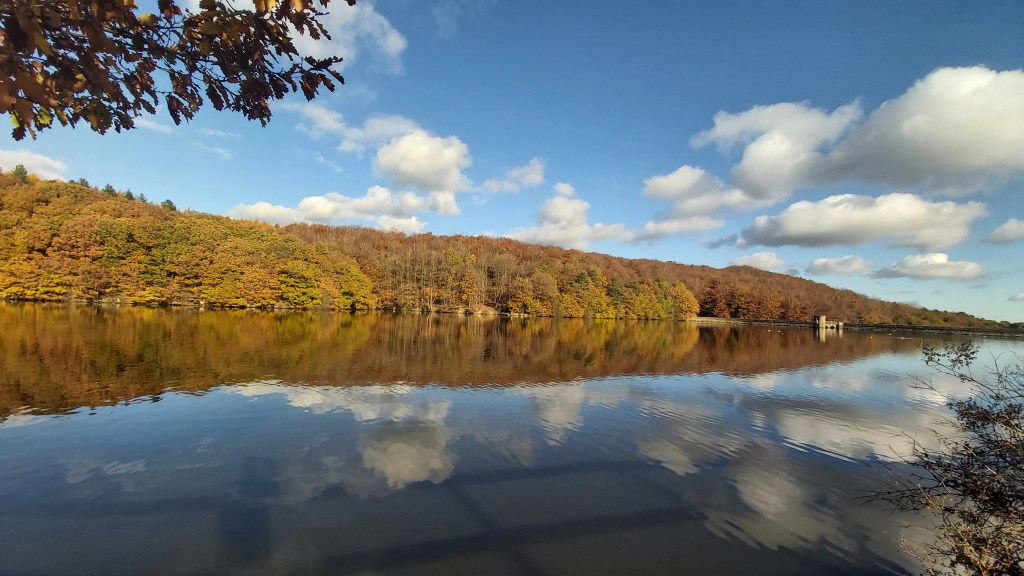
View from a recent run.
It is never my aim to be the fastest or run the furthest, the only person I compete against is myself. Sure I sign up for the occasional race but this is to add a time frame or specific thing to aim for and maintain my standard of fitness. I usually pick the fun or obscure races, somewhere nice or a bit different.
I still run for fun but it also to give myself purpose and routine. It gives me something to look forward to during the week and forces me outside. I usually feel better after a run than I did before however convincing my brain of this can usually take a while to get myself out of the door.
So why do I run? It is something I can do on my own, to my own schedule but also with others it a set time. It can be as short or as long as I want. Mainly because I can do it straight from my front door, it keeps me fit and active and allows me to escape all the noise in my head. It forces me to leave the house and gives me a purpose for a brief time during
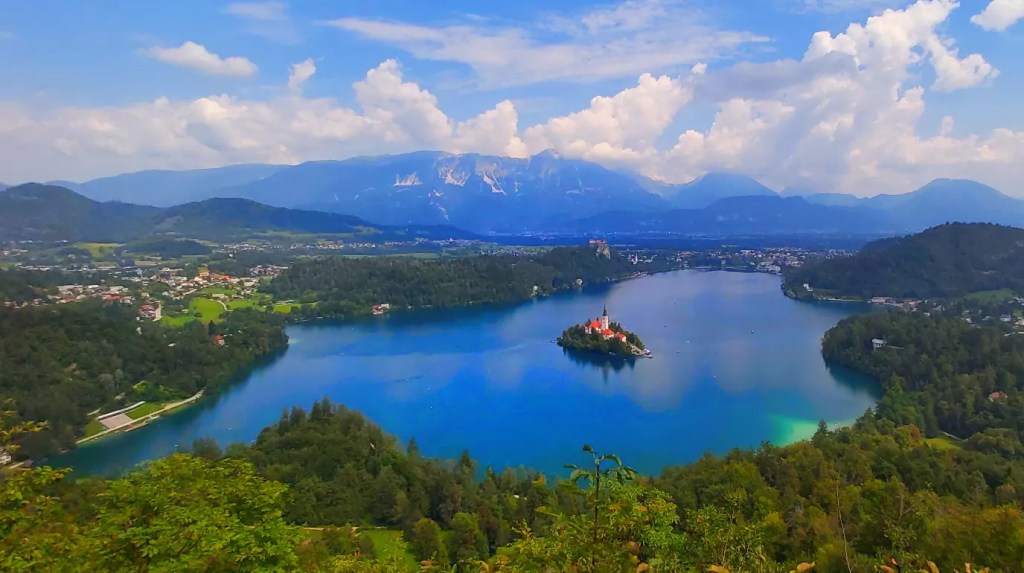
A 3 day hike in the Julian Alps reaching the highest summit in Slovenia, Triglav 2863m in height. This was the aim of the trip, also to see bits of Slovenia not yet explored by myself including some lakes.
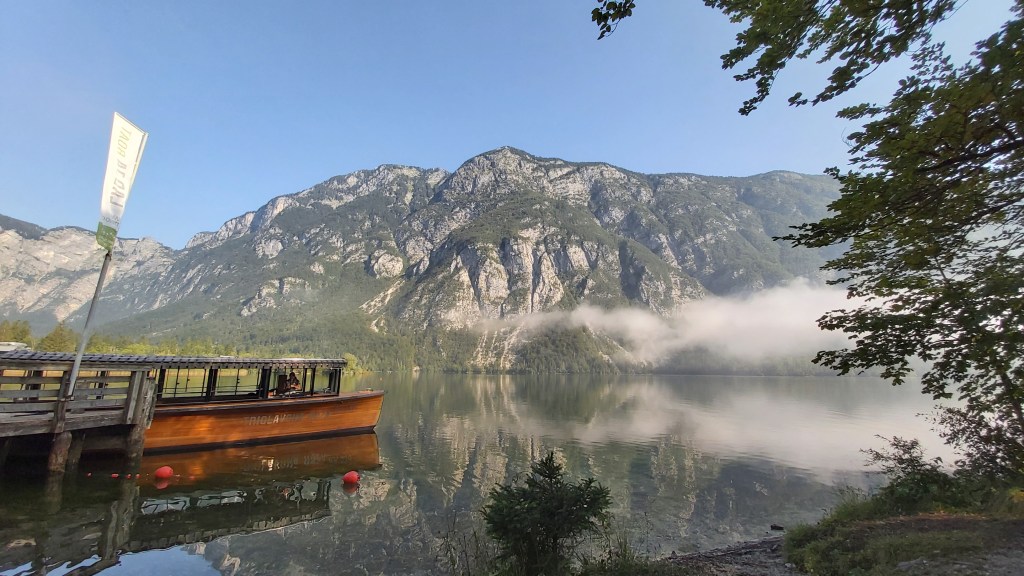
Lake Bled
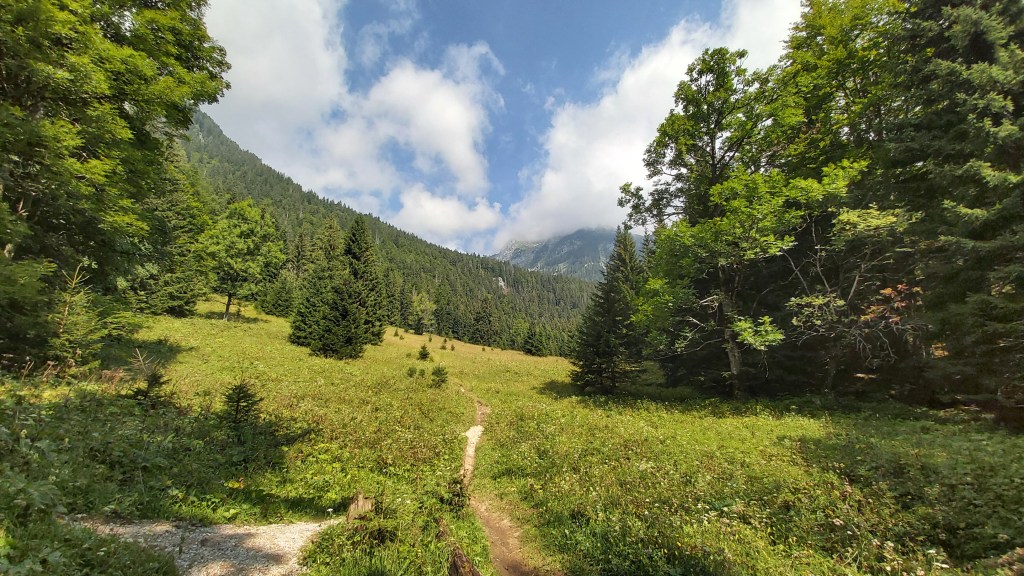
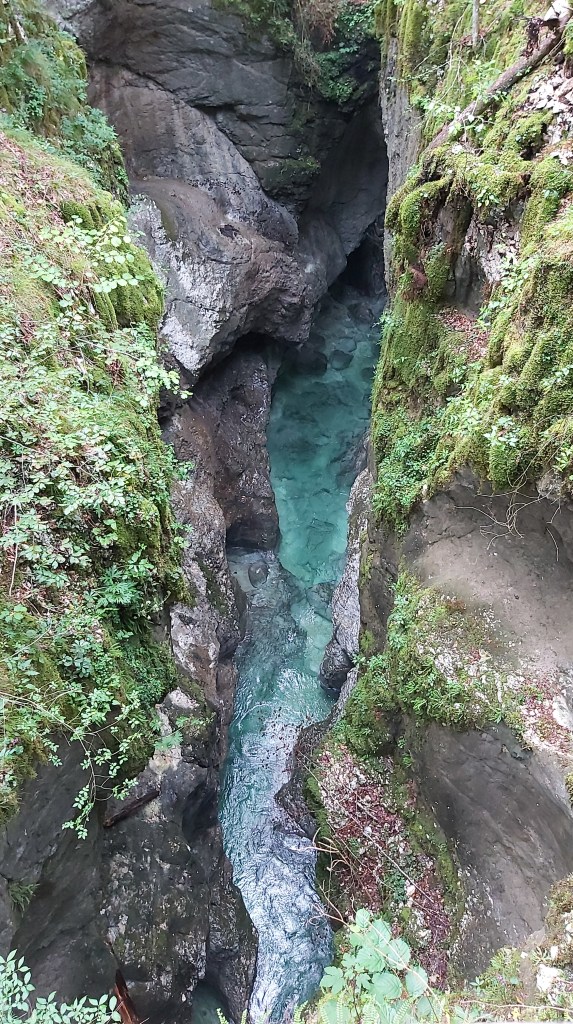
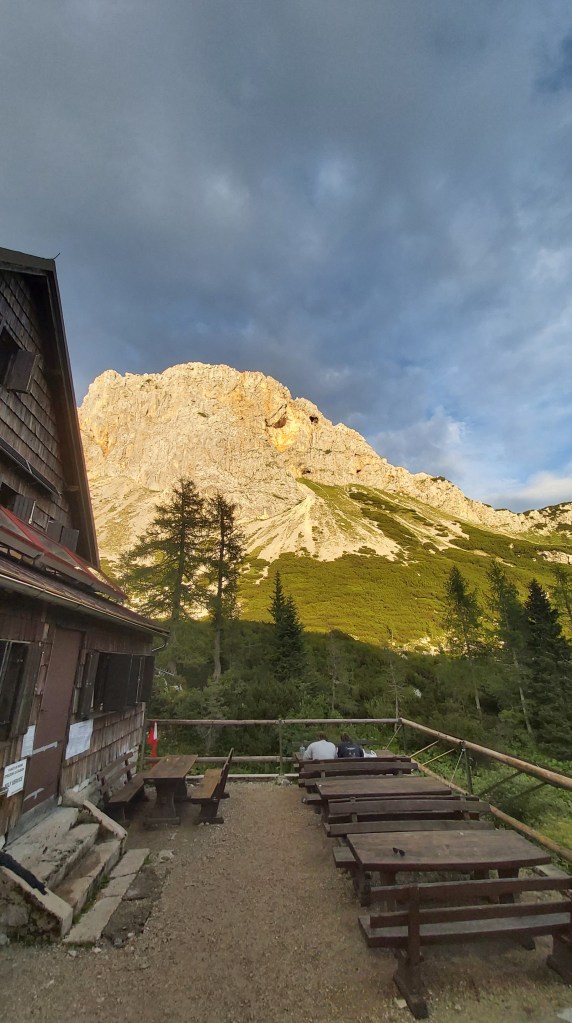
The walk started with a very early wake up and packing up tents to reach the meeting point to get maps and gear for the walk. Once this had all been sorted we were off on our own for the next 3 days to follow the route on the map. The first day being a 1900m ascent up to a mountain hut. Along the way passing through farm land, gorges, woodland and rocky alpine trails.
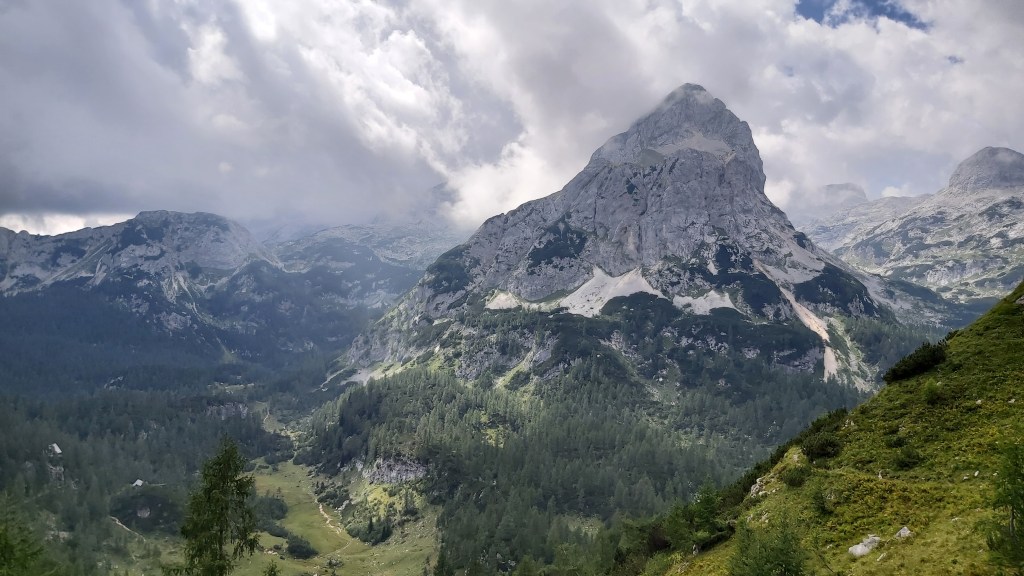
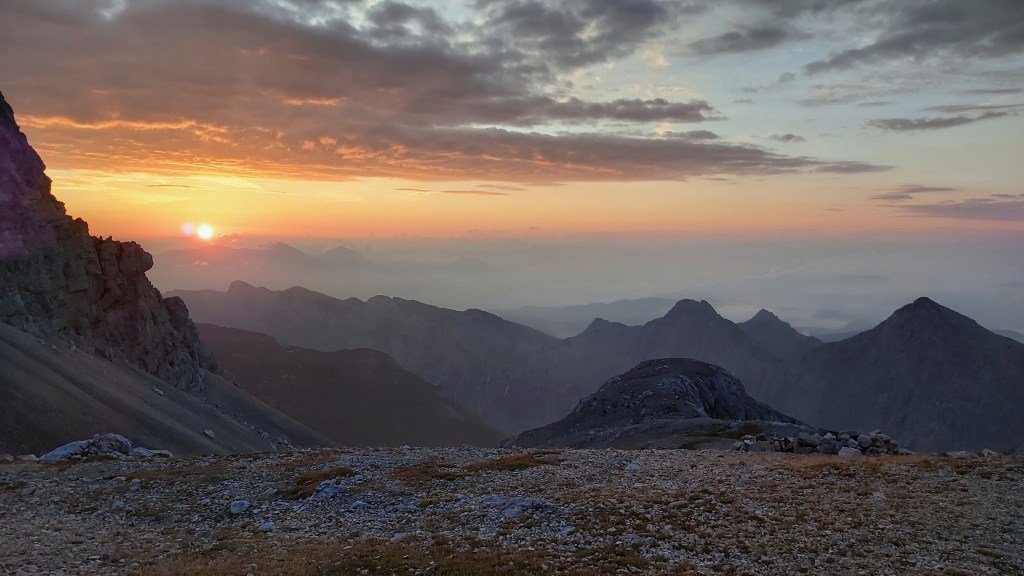
It was a long first day predominantly up but being rewarded with great views of the mountain ranges around. Arriving at the mountain hut to watch the clouds beneath us roll by and the thunder storms in the distance.
Sunrise at hut 1
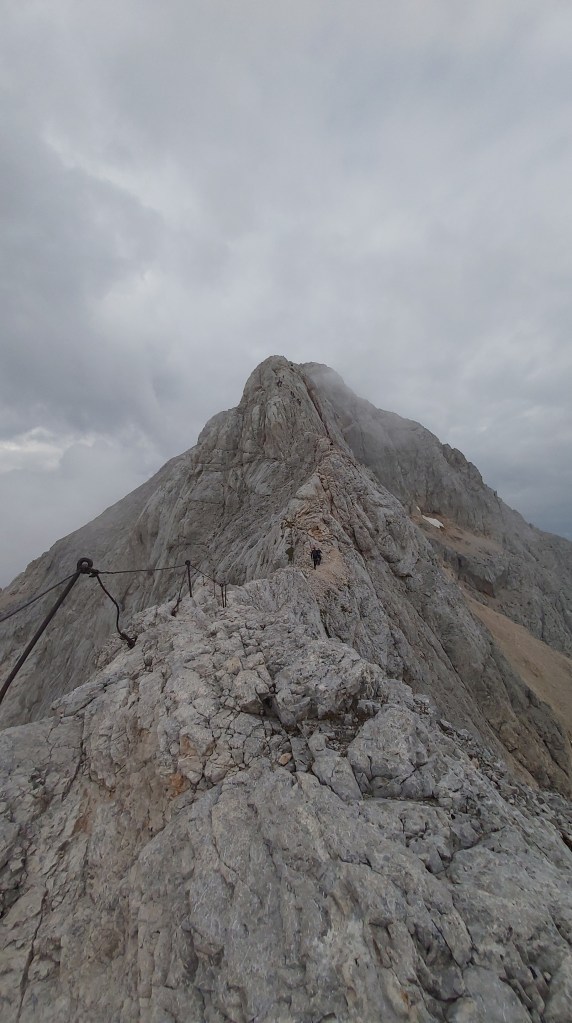
The second day started with a wonderful sunrise followed by getting harnesses on for the ascent to the top. This was the aspect of the walk I had never done before but turned out well and was more of a reassurance on the steep ridges.
Part of the ridge line
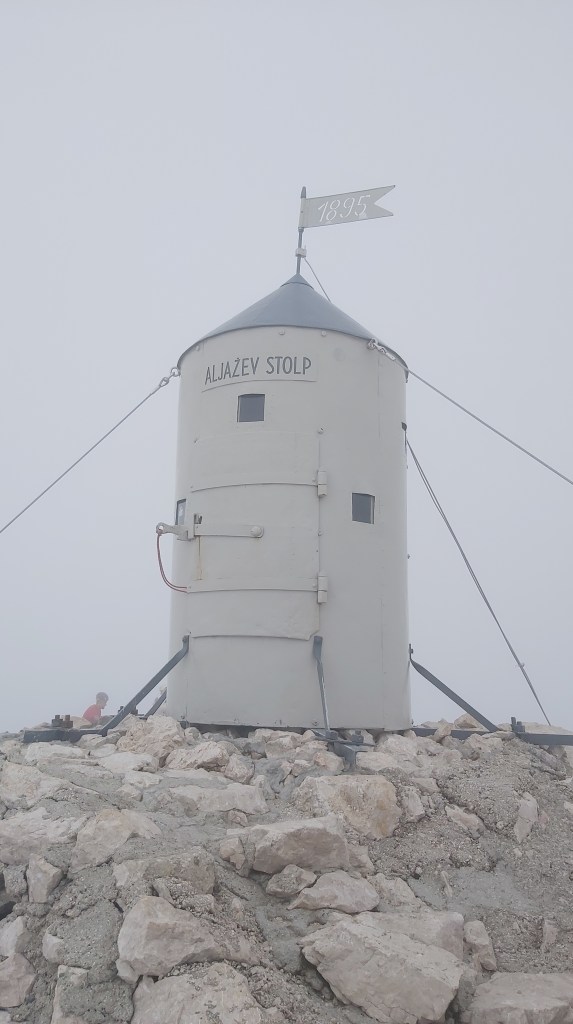
Climbing to the top to be be greeted by a man selling beer and pop (yes he had hiked up there with them) then began the long walk to the next hut.
The top
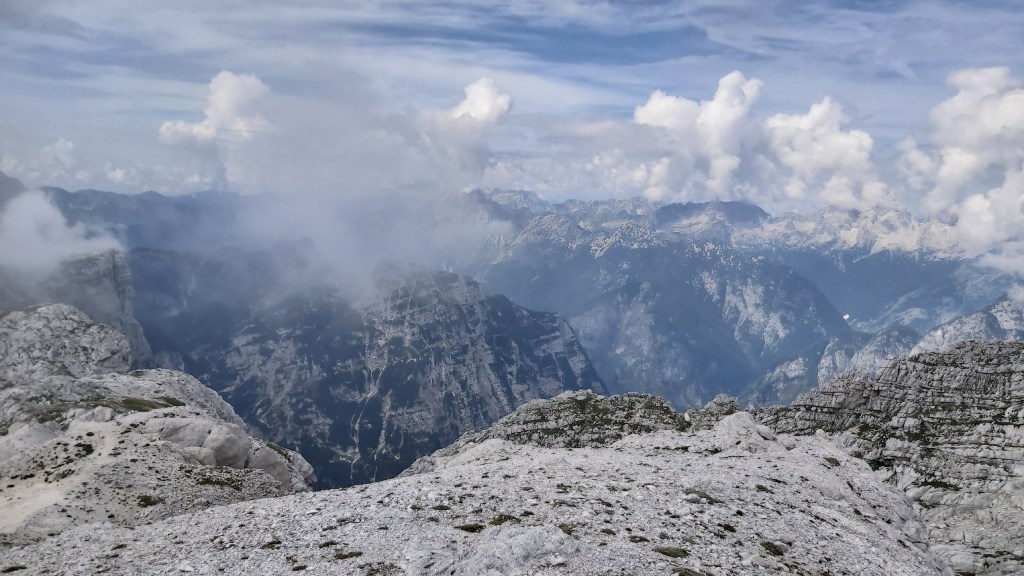
This consisted many of rocky and scree paths up and down into the mountains. I was glad of the red circles marking the way but still was very anxious about following the right route to ensure we got to the next hut.
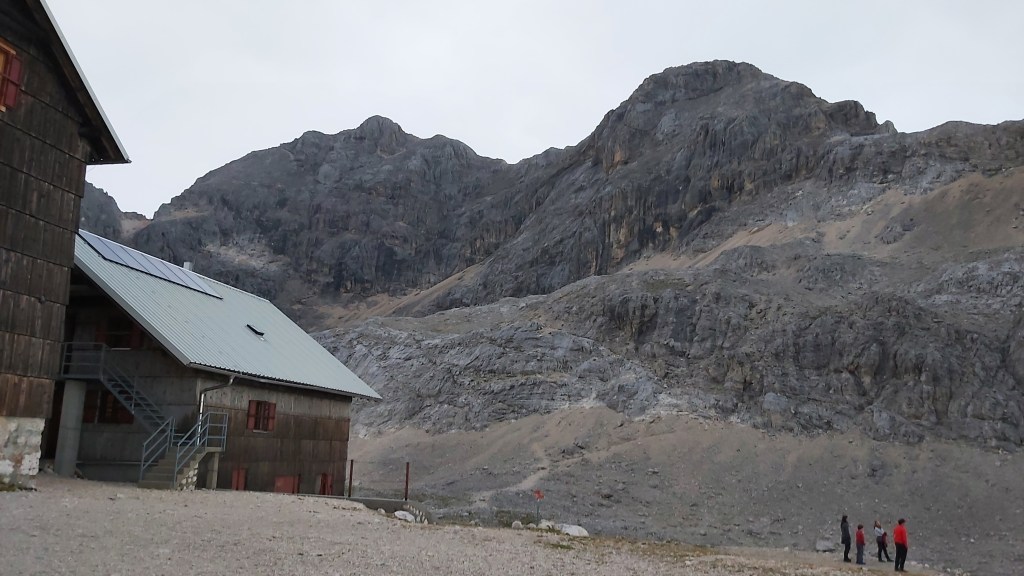
The walk on day 2 certainly seemed longer due to the terrain, tired legs from the day before and not being sure quite how much further it was. Seeing some of the wildlife in the area was a nice surprise. A few small rain showers as we dropped down into the grassy woodland led us to the hut after a long day. Food and bed were very welcome.
Mountain hut 2
Day 3. This was the final day and so required us to loose all the height from the past 2 days so was going to be a lot of downhill. Most of this walk was in and out of woods.
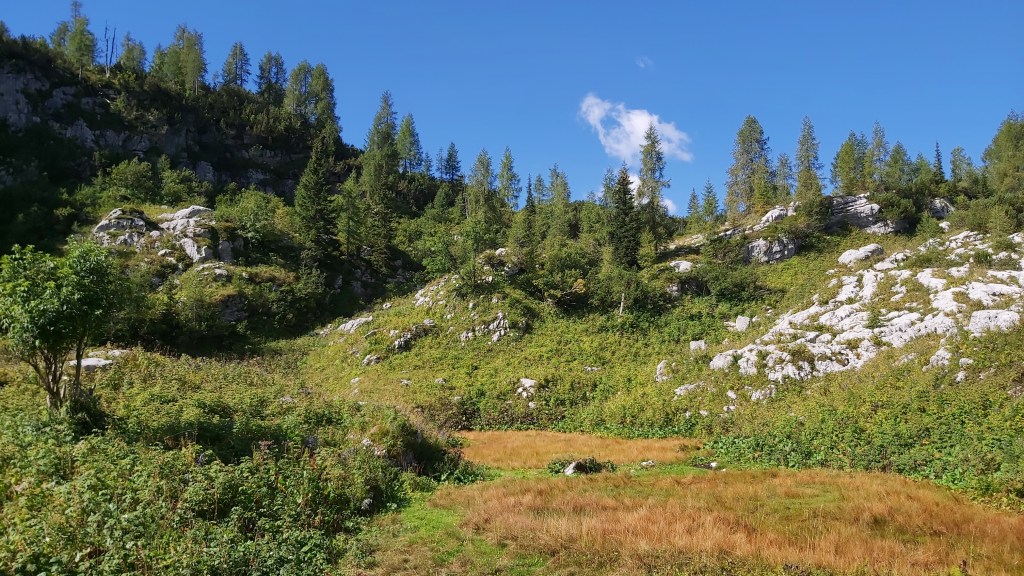
Changing landscape to greenery and woods
So views were limited but a change from the rocky barren landscape of the previous day. The real decent occurred close to the end as endless switch backs, approx 48 in total dropping down to a waterfall gorge and tourist shop were ice cream was purchased. This was also the point I realised we had to walk a bit further to get into town for the bus home.
Total walk 52.7km a bit further than the 40km on the map. 2891m climb.
This was certainly a tough but rewarding walk.
A little about the mountain huts. This was the first time I had stayed in anything like this but was pleasantly surprised. The check in and service was fantastic. The food was efficient and filling which is what you need after a long walk, especially considering all the food was flown in by helicopter. Sure the facilities where variable depending on which hut you stayed at but all had a good clean feel. Somewhere warm and comfortable to sleep.
It also made the walking easier when food and bedding was provided and did not have to be carried.
The adventure then ended with a bit of camping by a lake.
And relax!
Thanks to Leanne for joining me on this adventure as I never would have done it without her.
It has stopped me from doing and saying many things in my life.
Fear of losing people, fear of upsetting people. Fear of doing it wrong, fear of failure, fear of embarrassment, fear of dancing and looking silly. Fear of being alone for the rest of my life, however the fear of asking someone out outweighs this. Fear of being hurt. Fear of watching television or listening to music to loud in case I disturb others. Fear of being too early or too late, having nothing to say or saying the wrong thing.
Fear that I do not know what I am doing or that I don’t mean anything. If I were to vanish would anyone notice. Wondering if I will ever mean anything or simple exist.
Many of these fears are in my head for I do not know how others will react if I say or do the things I want to. But the fact they do exist in my head prevents me from doing them. Many of my fears involve being a burden to others.
They have unfortunately led me to miss opportunities in life, stopped me experiencing things I would like to do. Halt me from saying things I would like to, on how I feel or what I want to do. Instead, squashing my emotions in fear of letting them out, sometime to the point of feeling nothing. They have at times led me to be fearful of leaving the house, this could be fear or anxiety. Instead of facing the fears I hide away or bottle them up in the hope they will go away. They do not, they simply add to my regrets and build on my anxiety.
Therapy has suggested I need to do things which I am afraid of, slowly introducing myself to new things in the hope I can train my brain that not everything is to be afraid of. Finding the right balance of trying things but not too much that it scares me.
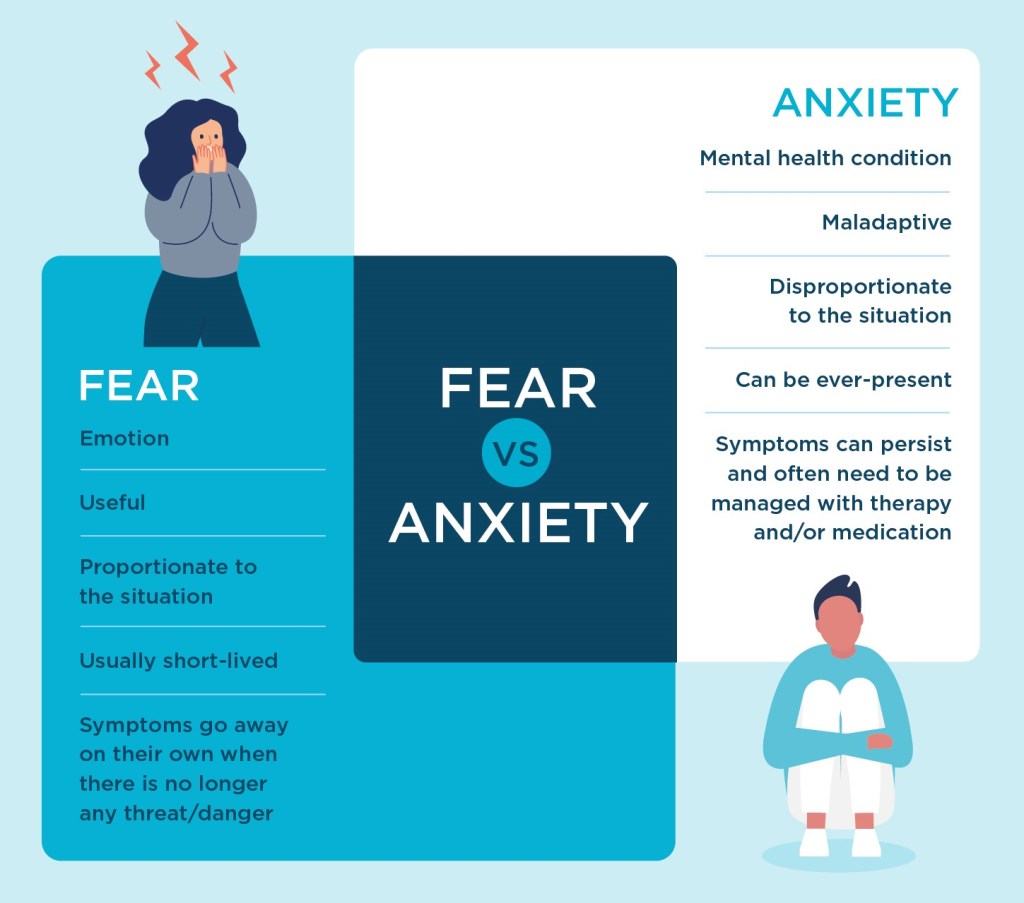
Researching and talking about it further my fear is actually anxiety. As it lasts longer than fear and is usually disproportionate, however often the things I am anxious about I have not done or experienced so not sure what a proportionate amount of worry is.
The physical fears I usually can plan through and work out the risk versus reward. However the mental fears I do not see the rewards only the risks associated to them. Hence avoiding them.
I have tried to do some things this year but they have always been accompanied with large amounts of pre-worry and anxious reflection as well as being distracted in the present so not sure I would call them a success
Rather than spending a week at home I decided to follow my own advice from many years ago and choose adventure over boredom.
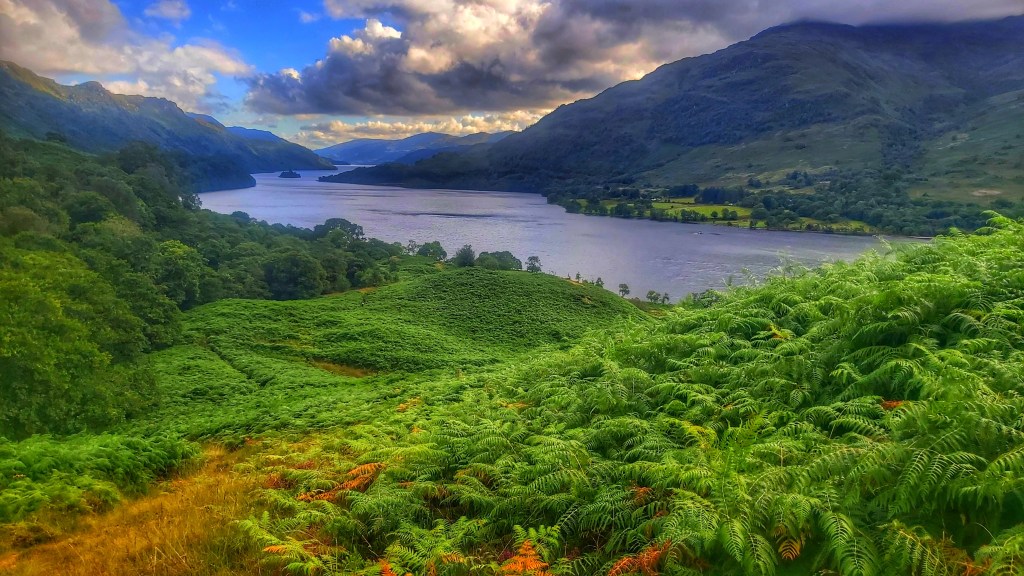
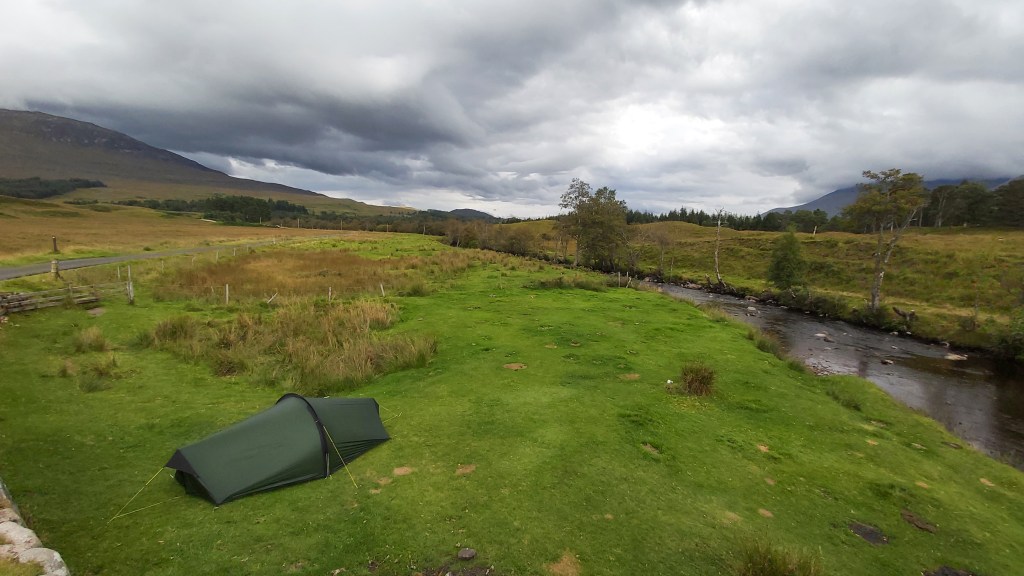
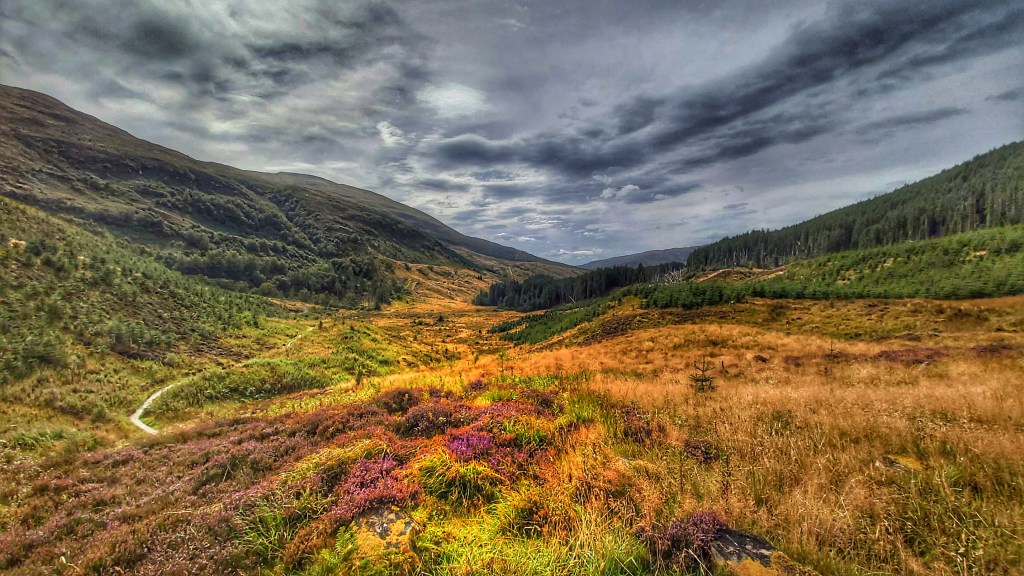
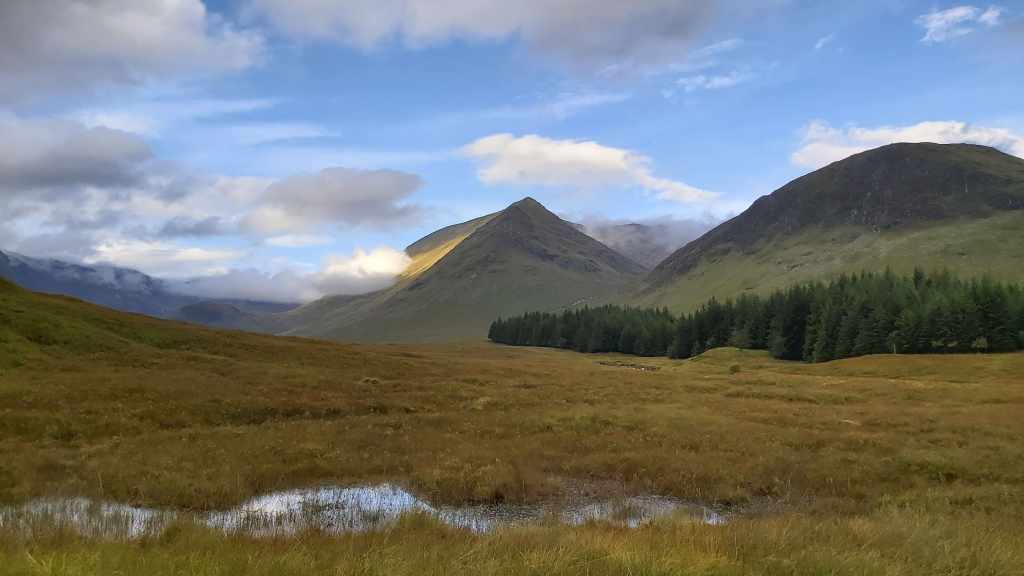
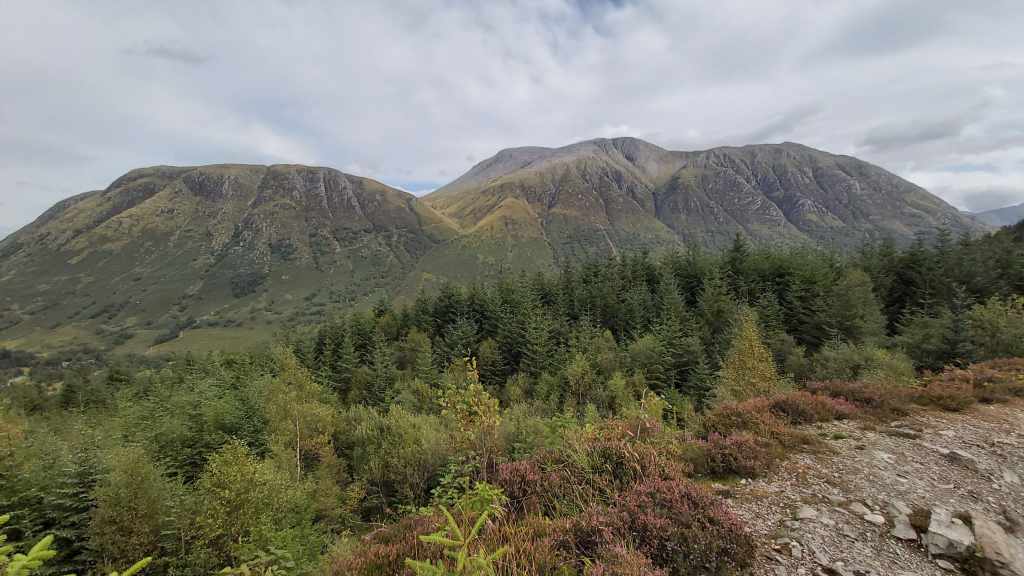
I walked the West Highland Way. 96 miles of walking and camping up Scotland’s west coast.
The thing which made this a nice trip was the simplicity of it. Each day I knew where I need to walk to, as I had already booked campsites or planned where to wild camp, so no thinking was required. Camping is a good way to simplify things, tent, bed, bag. If you can’t carry it you don’t have it. There is less to think about, the days become repetitive, pack bag, pack tent, walk, yet being in a different place each time makes it different. Where to pitch the tent? Can I dry it out? Where can I find food and water? These become the only big decision needed each day, the rest of the time you can enjoy the scenery.
When it gets dark you go to sleep, when it is light you walk.
The walk itself has been well documented and videoed by numerous people so I will not try write about the route itself only what I thought.
This was my first solo hiking camping walk I had done. I have been on various walks before and camping many times but combining the two and doing it over a week, this was a first. I chose this walk out of pure chance I stumbled upon it last year when camping in Scotland and noticed a large amount of hikers coming through and stopping at the campsite. So investigated what it was and became interested. Jump forward a year and I had booked campsites based on recommendation from guides and reviews on how far I should walk.
Setting off I was still very nervous, going into a lot of unknowns. Had I brought the right kit, would I get lost, would I be able to sustain carrying a bag and walking for this long? Some of the kit I had only just gotten and not really tested together, the big one is the tent. I had used it a few times but not enough to be confident with it.
On day 1 the anxiety of getting lost was dissolved as the route was well marked and the OS map of the route helped if any doubt. Along with many other people who could be followed or asked along the way. Throughout the entire journey I did not look at the physical map once and checked the OS app only a few times. Usually when a new logging trail had been build or to see how far left I had to walk that day. For many kilometres there was only one path through the landscape so very easy to follow.
With regards to the kit, this was a constant running thought of, should I have it, should I not. On reflection when unpacking after the trip there were very few items I had not used and some items I am glad I did not have to use. I would possibly tweak some of the items I took but it is very weather dependant on how much items would be used.
Walking speed and endurance was another reoccurring theme, as I was not sure how fast I would walk with a bag on for several days on unknown terrain. As some days which were short distance were long due to the terrain and elevation. Maybe I did walk too quickly but felt I walked at a comfortable pace for me, with the paths being easier enough to walk along. Arriving at the campsite each day with plenty of time to dry kit, eat food and look around. I never felt rushed and always had a good look at the scenery along the way. Maybe I could have shortened the trip by a day by walking further but that was not my plan, I was there to take my time and enjoy rather than race along.
Over all it was a nice walk with some great scenery and a nice achievement of having walked from point to point.
The lessons I learnt along the way.
• When an issue arises you either have to deal with it or delay it, but either way you need to deal with it.
• Gear might be good but still have issues.
I had what I thought was a good tent, light weight but enough room to fit me and my bag, which is true. The issue I had was the condensation inside and wet outer each day. The issue with being a small tent and condensation is, it is very hard to move inside the tent without touching the sides and getting wet. Which makes all your kit slightly damp. Trying to pack the tent up without making it wetter or everything else wet meant lots of dry bags. Then trying to dry the tent out and pitch it ready for the next night, seemed an endless cycle.
I also took a jet boil, which was not the issue. The gas I took with it decided to leak on day one, not sure if the value inside got bent or what but I now had a leaky gas canister which was not going in my bag and also meant no fuel for stove for rest of the trip. Solution talk to the campsite owner and get some more.
Not enough porridge, correction ate too much porridge early on as forgot how much I had allocated to each day. I decided before the hike I would take snacks and breakfast so I knew I would have some food to start me off and buy food along the way. So I packed packets of just add hot water porridge, which are very tasty and I have used many times before. What I failed to do was remind myself how many I had packed. The first few days I happily dived into my bag pulled out a couple of packets and made a nice bowl of porridge. It was not until day 4 that I looked inside only to find I only had 2 packets left for the next day. At which point I realised I had allocated 1 packet a day not 2. Which meant I had 2 packets for the next 4 days. Solution was to work out which days I could buy breakfast somewhere else, which days I could do without breakfast and when to eat my porridge. In the end I only had 1 day without breakfast.
Wet boots/socks causes issue with rubbing and wet feet quiet quickly so needs to be resolved. Plasters prevented further rubbing and fresh socks were a solution, but still left the issue of soggy socks to try and dry out. I found the best solution was a combination of thin socks, which dried, and waterproof socks. Even if the boots were wet my inner socks and feet stayed dry. Once boots it takes a while for them to fully dry and when you keep using them each day does not allow them enough time to improve.
Wearing waterproofs when it is raining is great to keep you dry, but ensure you take them off when it stops, otherwise you become very hot. I made this mistake on day 3, a particularly long and tricky walk which started out very wet. Initially walking along in full waterproofs was ok as the rain keeps you cool and keeps everything dry. However later on it stopped raining but I did not remove water proofs as firstly I did not realise it had stopped raining, then later did not know where to put wet waterproofs without getting everything else wet. So I left them on for the remaining 20km walk, which led me to be very hot and sweaty, which led me to drink all my water. I eventually made the connection but too late, I had been focusing on the very tricky terrain I was walking on and trying to get the miles in. I did learn my lesson though and the following days as soon as it stopped raining took off all my water proofs straight away and dangled them off my bag to dry.
Food is very important, ensuring I refuelled, rehydrate and rested at the end of each day was important. I had planned to buy food each evening rather than carry it. This proved to be a wise choice as I found I was extremely hungry. Occasionally I would get to camp, set up the tent, then eat a meal in a cafe or bar, basically where ever would let me in and was close. On occasions I would find after a short lie down or rest in the campsite that I was hungry again, even after large fish and chips or a haggis, neeps and tatties so would get a sandwich or what ever local shops/campsites would sell. I still managed to loose weight over the week so probably did not actually consume enough.
Make the most of good weather, especially when making and packing up camp. If it is dry when pitching or taking down the tent it makes things a lot easier. Ensuring everything stayed dry was a priority, so if I could take the tent down and not have to worry about the rest of my kit getting wet it was nice. When it was dry all tasks were easier but I was reminded not to get complacent as many times it rained when trying to pack my bag
These are all things I will consider next time I am planning and doing things like this.
It did not make the trip any better or worse but simply events which happened along the way.
This was a good learning for me, things don’t always go to plan but you can still get to the end.
You hear of athletes who talk about turning nerves into energy and excitement. “I found that reappraising anxiety as excitement is more effective than trying to calm down.” a US study of pre-performance anxiety, researcher Alison Wood Brooks. You see them at the start line of a running track or a game, usually focusing on what needs to happen next, visualizing the best outcome. The reason why they are at the top of their game is because they are able to control their mindset and emotions into positive energy and focus on the task at hand. Dr Josephine Perry, a sports psychologist and author of The Psychology of Exercise, recommends following the three Ps: prepare brilliantly, practice lots and stay process-driven.
Replicating this in everyday life can be harder as the occurrences of events which you wish to improve can be multiple times per day. Also turning everything into excitement or energy can be very draining, occasionally it is useful to be nervous. However doing small and regular training is better than neglecting to do anything.
Studies have shown that with training/therapy it is possible to change your mindset. Redirecting the neurons pathway to make activities fun and exciting rather than nervous and fearful.
This can only be achieved by being aware when negative thoughts or situations occur and consciously altering how you react but this needs to be a reoccurring and can be a long process. Just like going for a run or the gym it takes time to strengthen and improve.
“You grow when you are outside your comfort zone.” So why am I not as tall as a tree?
I guess depends on the size of the tree?
I seem to have many experiences outside of my comfort zone. I am not sure if this is because I have a small comfort zone or because I try and push myself.
I do not always recognise or appreciate the growth I experience so can get disheartened when I do not achieve goals. This is usually because I have overthought the activity or event and have set a high standard for myself. However I am learning that you do not always have to achieve perfection to be successful. Sometime just enjoying yourself and surroundings can be enough.
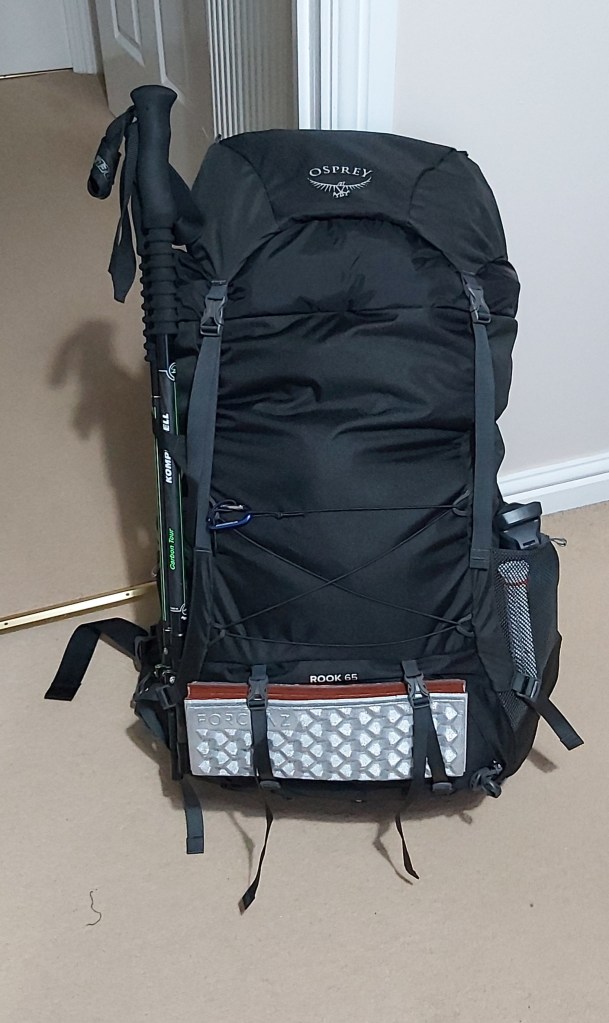
I have found when planning a multi-day hike these three factors have become a big part of my thinking when it comes to what I take. Obviously I want to be comfortable when hiking and camping for multiple days, it is not all about suffering. Unfortunately the more comfort you want when camping requires more suffering when hiking as the weight of the pack becomes heavy. I am not the first person to do this and therefore many companies have created great products which cater for lightweight backpacking however this does cost more. Hence, the big compromise between the three factors.
Research I have done suggest a pack weight of 20% of your body weight and that the main four items which weight the most will be the bag itself, tent, sleeping bag and sleeping mat. Therefore spending some money on these four items seems reasonable to minimize the weight, also a good nights sleep is determined by 3 out of the 4 of these so adds to the comfort element.
My example of this is a sleeping bag. I have a nice sleeping bag which is comfortable down to zero degrees centigrade but weights about 1kg, I could use a lighter 500gram sleeping bag which is only warm to 5 degrees and packs a lot smaller. I could then spend a large amount of money and get a 450gram bag which is warm down to -3degrees. This is personal preference on how warm do I want to be at the end of the day versus how much space does the bigger bag take up and weigh.
I have found that all the other bits and pieces which become necessary when walking and camping soon add up to quite a bit of weight and it is worth weighing all of them to see where several grams can be saved as they soon add up. Saving a few hundred grams on a smaller power-pack or lighter footwear for camp means the different between a full and empty bottle of water. A big consideration is also, will it fit into the bag itself? How do I pack it? What will I need first/last?
I have now packed and unpacked my bag multiple times, weighting it as a total and weighting individual bits to see what can be saved. I am now down to the final few days before leaving and have switched to throwing everything which fits in the bag as last minute things occur to me. Probably not best for the weight element but will improve the comfort, for example a pillow!
Are several phrases I have heard around this subject.
I think it comes down to where do you feel comfortable or where do you have a sense of purpose.
Someone who has no sense of purpose or feeling of belonging will feel alone in most situations. They may be present at events but likely just drifting through not understanding why they are there.
Loneliness takes a lot of the joy out of life.
Most good experiences or memories are when other people are there as the memories can be shared and re-lived, yet when the event is lonely it has less impact and can be forgotten easily.
Even when you do have a good experience and enjoy something it brings with it the knowledge that it will end and you will return to the loneliness. This can usually take several days or weeks to get over.
Which leads to question is something worth doing if it will lead to another episode of depression.
For someone who has been alone and lonely for a long time now, I do not know how to break the cycle. How do I become comfortable again and not feel lonely? How can I regain a sense of purpose in life?
Being alone brings with it a lot of self-doubt
– Am I alone because people don’t like me? -Am I lonely because I don’t like myself?
This reoccurs a lot for me, also the nagging question of why do people even talk to me?
Which generally leads to a lot of negative self-conscious thoughts.
I am better off alone as I cannot annoy people or mess up. I am better being lonely than making other people’s lives worse.
A therapist would ask what proof I have that this is true, but my brain just accepts that loneliness is better than annoying people.
Fear of drawing attention to myself means I do not have the confidence to do or say things.
Not understanding social situations means I avoid them in fear of getting them wrong or being embarrassed.
I don’t necessarily help myself when it comes to loneliness. It is tricky to meet people when you don’t leave the house. Getting out the front door is hard as I find less reasons to leave each day and before I know it several days have gone by without being outside or having on contact. Then when I do finally go somewhere I avoid interactions with people, generally out of fear and embarrassment and the unknown.
I recently joined a running club, which gets me out the house and is an activity I am comfortable doing. Due to many years of running on my own. However I treat the runs as just that, a run, I never stop and chat and usually arrive just in enough time to turn round and start running. Then when they are over I disappear as quickly as I can.
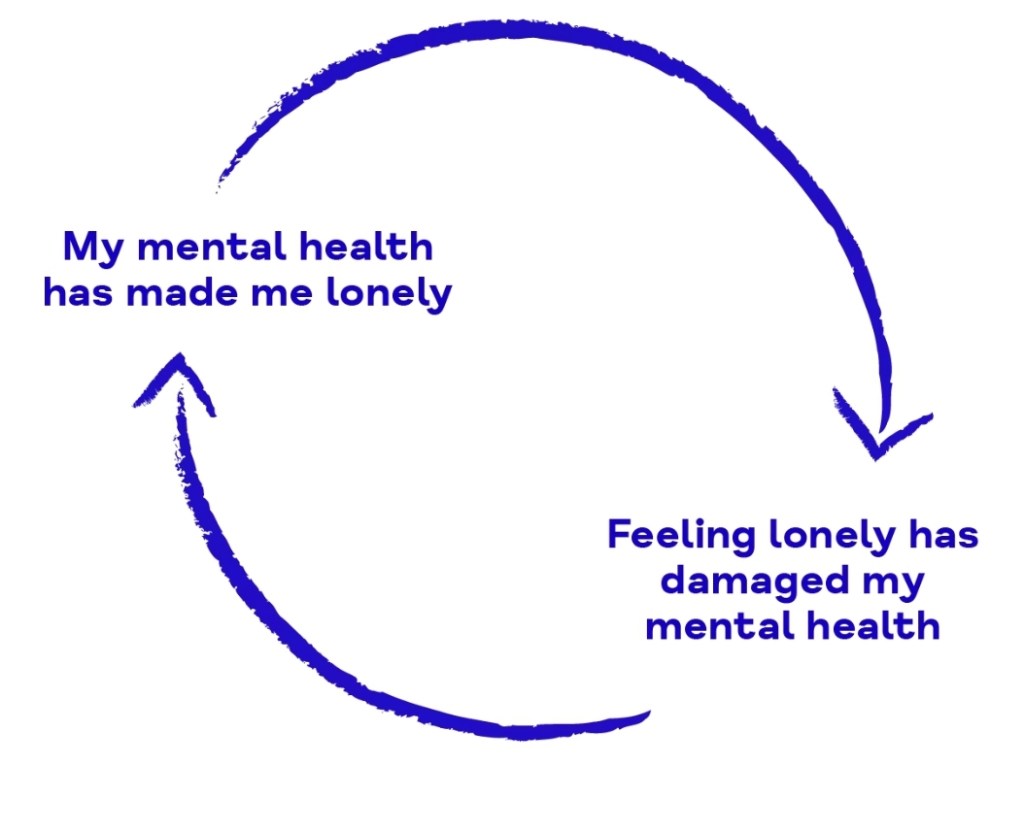
Anxiety stops me from doing things I want to or need to do.
This leads to Depression because I am not doing anything. Then because I am depressed I become more anxious that this will come across in social situations so avoid them.
This vicious cycle continues and the longer I am in it the harder it is to escape.
Being shy makes you assume everyone around you is confident. I know this is not true all the time but you generally compare others to yourself, so in my eyes everyone is confident.
I saw a quote recently which really hit home “You’re not going to wish you cuddled less at the end of your life.”
As the only people I hug are my family maybe a few times year. This is generally the only human interaction or physical contact I have. Which is probably not healthy, studies suggest it is a good way to produce oxytocin in the body, but I feel very awkward trying to figure out when and how to hug people so have just avoided it all my life. Maybe I should try to hug more but this would mean actually seeing people and being brave enough to ask them for a hug.
The problem with lonliness is once a thought or problem gets stuck in your head it is very hard to get rid of it, as there is no one else to rationalise the thought or fear. So it just keeps going round and round. Even small things can get very large and overwhelming in my head simply because there is no outlet.
I realise this is written very poorly and incoherant but felt I needed an outlet for my thoughts and maybe other people can realate to some of my ramblings.
After I moved to the area I joined a running club – mainly so I would find my way around places but also to get me out of the house and active during a period when Covid and isolation was still quite big. Being an outdoor activity and small managed groups felt like reasonable steps to be safe enough.
I have never been part of a running club before and only ever run on my own so did not know what to expect from the club, if I would even call myself a runner or if I would fit in.
My first impressions were, it was a well organised club and easy to get in contact by email, to ask about joining. Set days and times for sessions made it easy to plan when I could attend and a number of groups meant I could pick the one which I felt comfortable in.
The structure helped me a lot as it gave me a reason to leave the house twice a week, something I would not have done otherwise, I had been struggling mentally to find reasons to leave the house. Initially there was a sign up process, to limit the numbers and follow covid restricitions, this meant I felt responsible to turn up as did not want to make someome else miss out so encouraged me to turn up.
Having some knowledge of how fast I could run helped pick a group which were based on pace – however it was typically only over 5km. This was surprise number 1, most of the runs were 10km which I found out several Km in to my first run, until then I was feeling comfortable. At about 7 Km I realised I had not ran this far or fast for a long time but had no idea where I was so continued to try and keep up with what I seemed to remember was a very hot run. Well I got managed to make it round and got back to the club and somewhere I knew.
This initial run did not put me off but made me go and work on some personal running and fitness before I returned several weeks later. I should point out my previous running was very flat so figuring out how to run up hills took a bit of practice, as I have yet to find a run route which does not now include a hill.
The first few months were certainly tough – a combination of running longer distances than I was previously running. Having usually only ran 10km once a year, I was now trying to do it twice per week. It was also very hot through the summer which makes it harder. However my main aim of getting to know the area and being led round new places was certainly satisfied as each run I discovered new places and paths which could be explored. Still one year on there are new routes and paths to go down.
Later in the year when I was feeling more confident in my running and had figured out what pace I could regularly manage I was introduced to a run series called Peco – which is 5 cross country races held over winter. Expect a bit of mud, some hills and usually between 4-5 miles in different locations each month. Sounded sort of fun and something different also it was quite cheap so I blindly signed up and turned up.
The initial run was not too bad, it was dry so the ground was nice, several hills which I had come to expect on any run round here and generally well organised with a lot of keen runners.
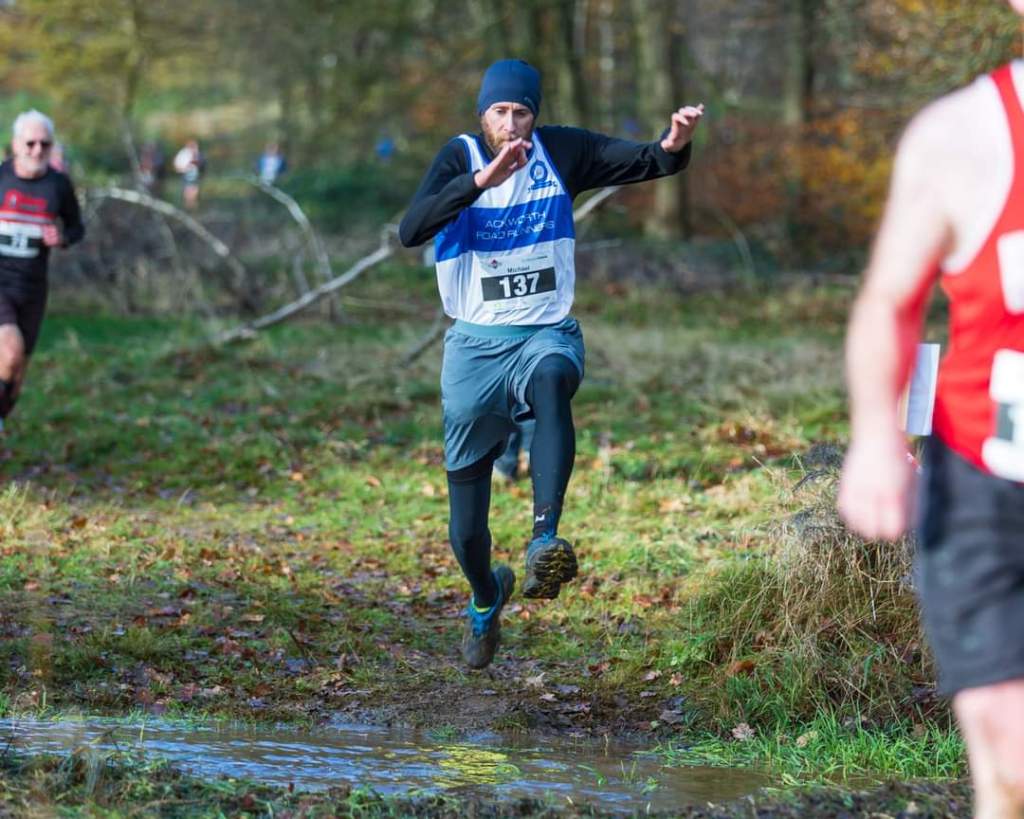
Jump forward several races to the last in the series were I was now accustomed to having mud up to my ankles running through puddles and snow. This was probably the most brutal as 90% of the course was either thick mud or ankle deep water, the only bits which were dry were the steep up-hills. At a barmy -1’C at the start a lot of people were wondering why they were there but soon warmed up after the first steep hill.
Just a small river crossing 📸 credit to Graham Beardsley
The club also introduced me to the local Parkruns of which there are several but I have yet to explore as tend to stick to the local one which I can run to. These are a very good bench mark of running progress and again introduced me to hills but also a bit of competition on a Saturday morning.
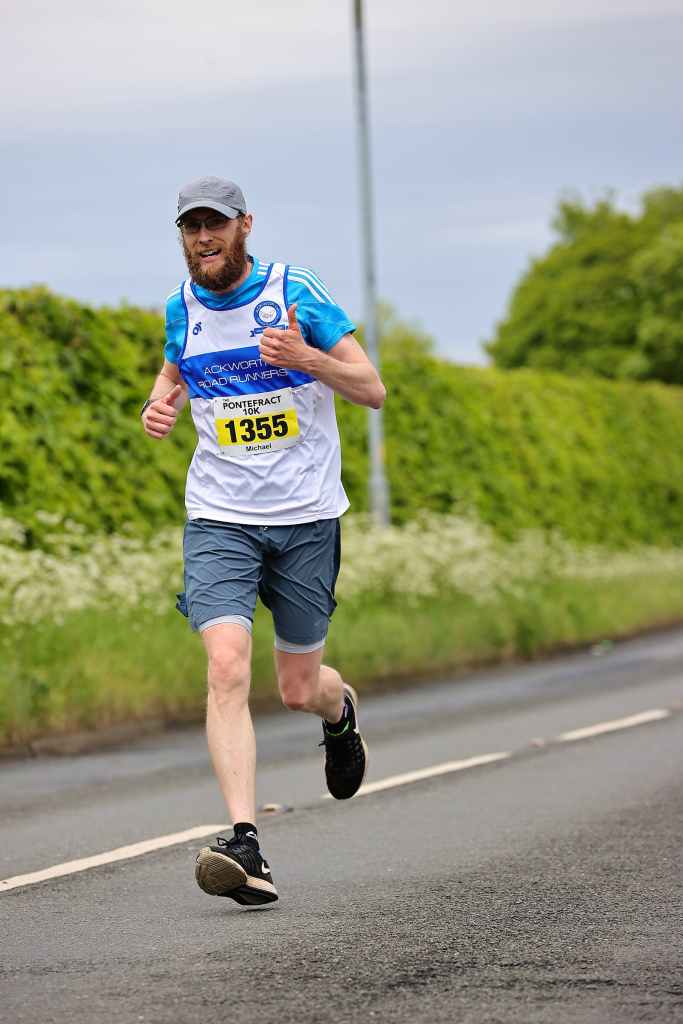
The first big race I signed up for was Pontefract 10km, by now I was used to running 10km so the distance was no longer an issue. It was now a challenge against myself, what time could I achieve? In mid week training runs I usually hit 50 minutes quite comfortably so it was a case of trying to find something challenging yet achievable. I picked 45 minutes and set my Garmin to give me a training plan to hit this time. Well I managed to follow the plan for about 2 weeks before realising I had set all the rest days on the plan the same day as club training runs so was not having any days off as the intensity increased. I had also only set the plan up 3 weeks before the run so not really enough time but gave me an idea of what was needed. Race day came round and I had forgotten how many people do these runs as the crowds gathered at the start line, dodging round this many people had not been factored in. Accepting that my first Km would be a slower one I just to adjust my pace in the rest of the run to offset this. Just to note I only actually looked at my watch twice once after the first Km to work out how much time I had lost then again in Km 3 to see if I had made it up. Well I managed to pull back the time and felt comfortable so just kept going at the pace I thought I could sustain. A nice downhill last Km fuelled by the knowledge it was almost over gave me a spurt at the end to cross the line in 42.59 which I was very happy with, as it smashed my planned time as well as my PB for 10km.

 Mike's Travel Adventures